When individuals hear the phrase drug detox, they frequently picture one narrow part of recovery: getting the substance out of the body and waiting on the worst signs to pass. In practice, a clinically supervised detox program is much more than a waiting duration. It is a structured clinical setting developed to help a person relocation through withdrawal with medical oversight, sign assistance, and a clear path into more treatment.
That distinction matters. Detox can be a vital first phase, however it is still only a phase. The strongest programs recognize that drug detoxing is not the very same thing as recovery itself. It is the stabilizing step that makes the next actions possible.
At Recreate Behavioral Health of Ohio in Gahanna, near Columbus, clinically monitored cleansing is used for alcohol and drug addiction, consisting of inpatient medical detox. The program explains a procedure built around 24/7 supervision, withdrawal management, medications to lower signs, nutrition and hydration assistance, and psychological support. For many patients, those pieces are what turn a frustrating and uncertain experience into one that is safer, more workable, and more linked to continuous care.
The core function of medical detox
A clinically monitored detox program exists to help a person through withdrawal under medical care. That sounds simple, however it covers a good deal. Withdrawal is not simply discomfort. It can include physical signs, emotional distress, varying vital indications, sleep disruption, and strong cravings. Even when the course is anticipated, it can change rapidly. That is why supervision matters.
In a nonmedical setting, a person might be left attempting to evaluate whether signs are expected, whether they are Recreate Behavioral Health of Ohio Fentanyl Detox getting worse, and whether they need aid. In a medical detox setting, that obligation shifts to qualified personnel. The patient does not have to monitor every advancement alone. The program does that for them, and it does so around the clock.
At Recreate Behavioral Health of Ohio, the detox process is referred to as medically supervised 24/7. That one information says a lot about what the program supplies. It suggests care is not restricted to a morning medication pass or an occasional check-in. It suggests there is continuous observation throughout a duration when symptoms can alter, sleep can be interrupted, and distress can increase unexpectedly.
Around-the-clock tracking changes the experience
One of the clearest benefits of inpatient medical detox is continuous observation. Recreate states that its team monitors important signs throughout detox. In plain terms, that suggests the program is not relying only on what a client reports. It is also using objective indications to track how the body is responding.
That can shape choices in real time. If symptoms intensify, staff can react. If medications require modification, there is a scientific setting in place to evaluate that need. If the client is struggling physically or emotionally, support is present instead of hours away.
Families often underestimate how essential this is up until they have actually seen what without supervision withdrawal can look like. A person might start with self-confidence, just to find that pain, stress and anxiety, interrupted sleep, and cravings make it much more difficult than anticipated. In a clinically monitored setting, those minutes are not dealt with as individual failures. They are treated as part of a withdrawal process that requires tracking and care.
Medications can minimize withdrawal symptoms
Another major element of monitored drug detox is the use of medications to decrease withdrawal signs. Recreate specifically notes this as part of its detox services and likewise referrals medication-assisted treatment on its detox pages, including care associated to opioids and fentanyl.
The useful worth here is straightforward. Withdrawal management is not practically observing suffering. It has to do with reacting to it appropriately. Medications may assist lower the strength of signs and make the process more tolerable. For somebody getting in detox after heavy or extended substance use, that support can make the distinction in between remaining engaged in care and sensation not able to continue.
This point is specifically essential when individuals have actually established impractical expectations about what treatment need to seem like. Some still believe that detox should be endured without medical assistance in order to "count." That concept does not hold up well in scientific settings. The purpose of medical detox is not to prove strength. It is to stabilize the client and assist them move through withdrawal as securely and successfully as possible.
Recreate's detox services particularly discuss alcohol, opioids, and fentanyl. That works due to the fact that it indicates that the program is resolving compounds commonly related to challenging withdrawal patterns and a requirement for structured withdrawal management. It also informs clients and households that the center is not describing detox in vague terms. It is naming the kinds of issues it is established to treat.
Support is not just medical
Good detox care is not restricted to important signs and medication. Recreate also identifies nutrition and hydration assistance as part of its detox process, in addition to emotional assistance. Those elements are simple to ignore on paper, yet they are typically what clients keep in mind most clearly.
A person in withdrawal might not be eating or consuming well before admission. They may get here exhausted, diminish, distressed, dissuaded, or embarrassed. If a program focuses only on the chemical side of withdrawal and neglects the fundamental physical and psychological condition of the person, it misses out on a large part of what early stabilization requires.
Nutrition and hydration support help bring back basic operating throughout an unsteady duration. Emotional assistance matters for a various factor. Detox is frequently the moment when reality lands. The compound is no longer masking distress, and the individual has actually not yet reached the structure of longer-term treatment. That can be a raw and vulnerable window. Calm, constant support can assist keep a client from feeling abandoned inside the process.
This is among the locations where knowledgeable treatment groups make a noticeable distinction. Clients rarely get to detox as blank slates. They can be found in scared, resistant, tired, or ambivalent. Some are relieved to be there. Some desire aid and also want to leave. A supervised detox program offers more than sign control. It provides containment, steadiness, and the message that someone is paying attention.
Detox has a timeline, however not a one-size-fits-all script
Recreate states that the normal withdrawal and detox period is about five to ten days, depending on the substance. That variety is helpful due to the fact that it gives people a practical frame without pretending every case unfolds the very same way.
In real treatment settings, patients and households frequently desire specific responses. The length of time will this take? When will the hardest part be over? When will the individual feel typical again? Programs need to beware not to overpromise. A typical variety is useful. A guaranteed timeline is not.
The five-to-ten-day window informs you that detox is normally measured in days, not months, however it likewise leaves room for scientific judgment. Various compounds can produce different courses, and clients do not all enter treatment in the exact same physical condition. That is one reason a medically monitored setting matters. The team can react to how the actual withdrawal unfolds rather than requiring the patient into a rigid expectation.
For lots of people, that flexibility reduces panic. It is easier to tolerate a tough process when you understand there is a structure, a group, and a predicted variety, even if the specific everyday path can not be mapped in advance.
Inpatient medical detox supplies security from disruption
There is another useful benefit to inpatient care that typically gets lost in broad descriptions: it eliminates the person from the environment where compound usage has been taking place. Recreate deals inpatient medical detox, which indicates detox is not taking place with the client attempting to browse common everyday triggers at the same time.
That separation can be important. Early withdrawal is not an ideal time to handle work tension, household conflict, transportation problems, or simple access to substances. A dedicated setting creates area for stabilization. It narrows the focus to care, observation, sign management, and preparation for what comes next.
This does not suggest inpatient detox solves everything. It does mean the person is not anticipated to detox while holding together the rest of life at the very same minute. That is often a more sensible scientific approach.
Detox is more powerful when it is connected to the next level of care
One of the most essential facts about Recreate Behavioral Health of Ohio is that detox is followed by a continuum of care that can consist of residential inpatient treatment, intensive outpatient programs, outpatient care, and peer support. The very same center also mentions that detox and rehabilitation services are offered in one place, permitting clients to shift from detox into domestic treatment without changing places or teams.
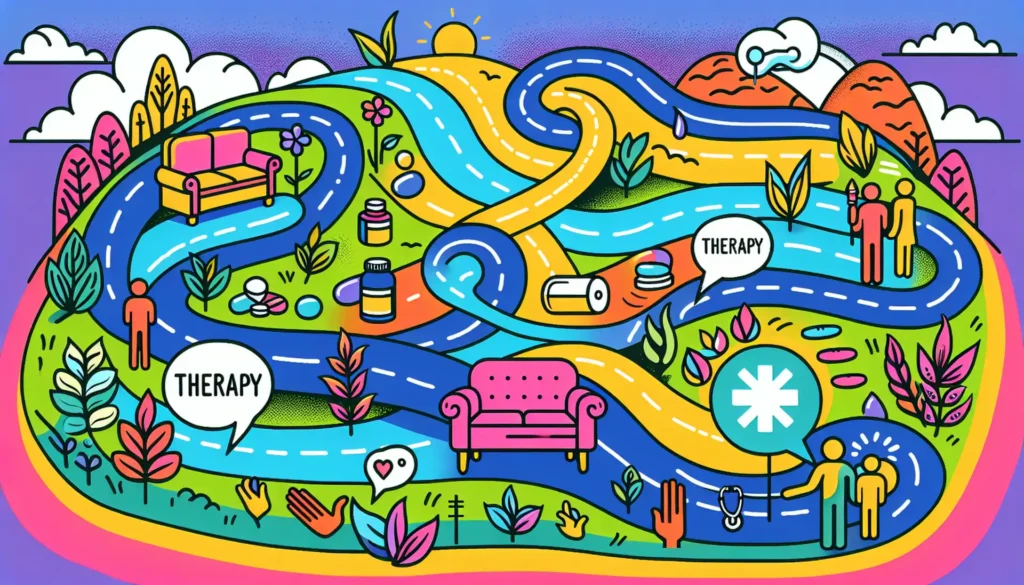
That connection is more important than lots of people realize. Detox by itself addresses immediate withdrawal. It does not resolve the broader pattern of dependency, the practices built around compound use, or the support required after stabilization. The handoff from detox to the next stage is where many individuals either gain momentum or lose it.
When detox and rehabilitation exist in the exact same center, the shift can be more direct. The client does not have to start over in a new area, describe themselves to a completely different team, or soak up a fresh environment at the very moment they are still physically and mentally depleted. Familiarity matters. So does timing.
A seamless move into residential treatment can decrease the dead space in between "I made it through withdrawal" and "Now what?" In my experience, that gap is where inspiration frequently wobbles. An individual may feel physically clearer but mentally unpredictable. If the next step is already constructed into the setting, there is less space for drift.
Here is where a continuum of care becomes especially important:
- Detox addresses instant withdrawal and stabilization. Residential inpatient treatment can offer more immersive structure after detox. Intensive outpatient shows uses a greater level of assistance without complete residential stay. Outpatient care extends treatment into ongoing everyday life. Peer assistance can assist sustain connection and accountability.
That sequence is not similar for each client, and not every person needs every level. The bigger point is that medically monitored drug detox works best when it is not treated as a standalone event.
The emotional turning point often happens after the very first relief
There is a typical pattern families observe. They brace for the first days of detox since those seem like the obvious crisis. Then the client ends up being more physically stable, and everyone expects things to feel significantly much better. Sometimes they do. Sometimes a different challenge appears instead.
Once the immediate fog starts to lift, the individual might feel the weight of what comes next. They may understand that detox was essential, however not enough. They might likewise confront emotions that had been numbed or held off. This is another factor a medically monitored setting with psychological support and built-in next steps is so valuable.
Recreate's design, as explained on its site, does not stop at sign control. It ties detox to more comprehensive dependency treatment and mental health services. That matters since the transition out of severe withdrawal is often where treatment ends up being more honest. The person is no longer focused only on getting through the day physically. They are starting to deal with recovery decisions.
Families need to know what useful concerns to ask
Many admissions start with unpredictability rather than certainty. A spouse, moms and dad, brother or sister, or client may know assistance is needed, however not know how to evaluate a program. In those conversations, useful details matter more than shiny language.
A helpful set of questions includes these:
- Is detox medically monitored 24/7? Are medications utilized to reduce withdrawal symptoms when appropriate? Does the program supply inpatient medical detox? What happens after detox, and can care continue in the exact same facility? Is help offered to verify insurance coverage coverage?
Those concerns go straight to the genuine experience of treatment. Recreate's public details addresses each of them in a direct way. The center describes 24/7 supervision, medication support, inpatient detox, a continuum of care after detox, and insurance confirmation assistance.
That type of clarity is practical because individuals seeking care are frequently making choices under pressure. They do not need vague assurances. They require to know what services exist, how assistance is delivered, and whether treatment can continue without unnecessary disruption.
Insurance and gain access to are part of what a program provides
It is simple to go over treatment as if scientific care were the only variable. For many households, access is the first barrier. Recreate states that it accepts most significant insurance plans and uses insurance coverage confirmation assistance. That may seem like an administrative detail, but it can substantially affect whether someone gets in care rapidly or delays looking for help.
In the real world, hold-up has repercussions. Individuals are reluctant when they are not sure what is covered, what the next call will involve, or whether they can handle the logistics. Insurance coverage confirmation support decreases some of that friction. It does not eliminate every barrier, but it can make the initial step more manageable.
A treatment program offers more than beds, clinicians, and medications. It also supplies a way into care. That operational side should not be dismissed as secondary. When somebody requires detox, smoother access can matter a fantastic deal.
Licensing and organizational structure likewise matter
Recreate Behavioral Health of Ohio mentions that it is licensed by the Ohio Department of Mental Health and Addiction Providers and that it is part of the Recreate Behavioral Health Network. The Joint Commission supplier locator likewise lists Recreate Behavioral Health of Ohio LLC at the exact same Gahanna address and reveals 24-hour weekday operations for the site.
For clients and households, these details help establish that the center is running within a specified treatment framework instead of presenting itself informally. Individuals getting in detox are frequently in no position to examine every functional information, however licensing and clear organizational identity still matter. They are part of how a program demonstrates that it is built as a healthcare setting, not simply promoted like one.
Why "exact same place, very same team" can be a major advantage
One reality about Recreate deserves extra attention: detox and rehabilitation services are offered in one facility, enabling clients to shift into domestic treatment without altering areas or teams. That setup can lower dropout risk at a delicate moment.
Anyone who has actually worked around treatment knows that shifts produce vulnerability. A client finishes detox, feels a little more powerful, and after that needs to cross town, repeat consumption, fulfill brand-new personnel, adapt to various guidelines, and rebuild trust. None of that is impossible, but it includes stress when durability is still low.
Keeping detox and rehabilitation linked in one place decreases those extra hurdles. The client currently understands the setting. Staff already know the patient. The early days of treatment can develop on the stabilization work rather than restarting the relationship from scratch.
That connection has a less noticeable benefit too. It can alter how the patient understands detox itself. Instead of seeing detox as a separated ordeal to survive, they can begin to see it as the primary step in a coherent treatment process.
What medically monitored drug detox really offers
At its best, clinically supervised drug detox provides order throughout a chaotic duration. It uses observation when symptoms are tough to judge alone. It uses medications that can minimize withdrawal symptoms. It provides hydration, nutrition, and psychological assistance when standard performance has actually been strained. It provides a structured setting that safeguards early stabilization. And when it is well developed, it provides a direct bridge into the next level of care.
At Recreate Behavioral Health of Ohio, those pieces are described clearly: inpatient medical detox, 24/7 medical guidance, tracking of essential indications, medication assistance, withdrawal management, psychological assistance, nutrition and hydration assistance, and continued treatment alternatives after detox. The normal withdrawal duration is described as about 5 to 10 days, depending on the substance, and the same facility can continue care into property inpatient treatment, intensive outpatient programming, outpatient care, and peer support.
That mix is what many people are actually looking for, even if they do not understand how to call it in the beginning. They are not merely trying to find a location to stop using. They are trying to find a place that can assist them make it through withdrawal safely, stabilize, and keep moving forward without losing momentum. That is what a clinically supervised drug detoxing program is meant to provide.